
Herd Dynamic Profiling™: Bringing Your Horse Into Focus
Updated: Dec 27, 2025

We invest heavily in what a horse is.
Pedigree. Conformation. Movement. Talent. Discipline suitability.
And rightly so.
But how much is truly invested in who the horse is?
Because regardless of breed, discipline, or goal, who the horse is determines everything they can become, and just as importantly, how safely, confidently, and sustainably they can get there.
Before you drive a new car, you want to know more than how fast it goes. You want to know how it handles corners, rough roads, sudden stops. You want to know where the headlights are, the indicators, the windshield wipers, the systems that quietly keep you oriented when conditions change.
Before you put a saddle on a horse or clip on a lead line, the same question applies:
Do you understand the operating system running the machine?
This is where Herd Dynamics and Sensory Soundness™ come in. Herd Dynamic Profiling™ is not a training method; it is the method that leads to better training. It is a way of understanding the internal architecture that governs how a horse processes the world, the framework guiding every decision, reaction, relationship, and response long before a behavior ever appears.
What follows is a window into that inner world.
Not a profile of one specific horse, but a composite, a reflection of many horses we’ve known, worked with, struggled with, and grown alongside. Think of him as Traveler, a familiar presence, carrying pieces of horses you may already recognize.
The horse speaks. Not in words, but in a natural rhythm expressed in harmony and contentment. Our job is not to make him louder, but to remove the static from the line.
Between the Ears
From the outside, Traveler looks capable.
Athletic. Willing. Sensitive in that way people often describe as special.
Under saddle or on the ground, there are moments of beautiful harmony, times when movement feels effortless and connection feels mutual. And then, just as quietly, something shifts. Rhythm is interrupted. Focus drifts. The horse speeds up or slows down without an obvious reason. Transitions lose fluency. Turns feel floaty, like a car skimming across an icy road.
The rider feels it immediately: the body is still moving, but the mind has slipped somewhere else.
Traveler is not disobedient. He is not confused. And he is certainly not dull.
He is processing. We must remember that the sensory system must clear space for the body to move through, at least two times fast than physical movement, for that motion to be fluent.
At his core, this is a horse who studies the world carefully. He needs time to interpret what space means before committing his body to it. When he has a clear forward target and a partner whose intention is steady, quiet, and purposeful, his mind and body align beautifully; the ultimate communication between you and your horse is their movement through your intention.
But when that clarity fades, when the world becomes rushed, vague, or emotionally noisy, his attention floats outward. His body keeps going, but without full psychological guidance.
What looks like inconsistency is not a training flaw. It is the onset of mental fatigue.
How the World Arrives
Every horse experiences the world through a sensory system that determines how quickly information arrives, how efficiently it is interpreted, and how much emotional pressure builds along the way.
For Traveler, forward space is easy. When asked to go somewhere, truly somewhere, not just move, (horse’s need purpose-to-movement commitment from us) he commits. However, for Traveler, lateral and environmental information takes longer to process, and sometimes he needs help to bridge the gap. Stimuli that appear suddenly, especially close to the body or from behind, require additional time for interpretation.
When that time is not available, or the bridge is never built, the mind briefly falls behind the body. This is when rhythm changes.
Sometimes he speeds up, as if trying to outrun the pressure of processing. Other times he slows, hesitates, anchored by the weight of stress, or he disconnects altogether, his body in one place and his mind somewhere, anywhere else. These are not physical problems. They are signs that the internal fabric between mind and body has stretched too far; like puzzle pieces pulled apart, barely holding the image together.
When the world moves fast, it is easy to get swept up in it.
But when Traveler’s sensory sequences are respected, given time, when space is entered gradually, when intention is clear, when rhythm is allowed to establish before complexity is added, his entire system softens. Focus returns. Movement becomes purposefully expressive rather than reactive.
He does not need to be over-managed with physical triggers, he needs help with clearing space, help in creating a larger cushion between the world that is and the world that is perceived to be. We know that feeling, the sense of the walls closing in… isolation in a crowded room can feel emotionally suffocating.
Herd Instinct in a Human World
In nature, no horse processes the world alone.
Responsibility is distributed across the herd. A rare few lead movement, some stabilize the environment, others regulate emotional flow. When one horse struggles, another quietly fills the gap. The jigsaw puzzle is never pulled too far apart; the strain of survival is distributed.
There is a direct relationship between how efficiently a horse processes sensory information and how fully their talent can be expressed under the pressures of domestication. In nature, the herd exists to protect that efficiency.
In domestication, much of this structure disappears, but the need for it does not.
This is where the human must step in, not as a replacement for the herd, but as a bridge between the horse’s natural design and the demands of a human-made world.
Traveler is not meant to carry the full burden of awareness by himself. He benefits from partnership… not control, not micromanagement, but shared clarity. When his handler or rider provides emotional guardrails, steady intention, sequential focus points, and consistent rhythm, the world happens at a pace he can fit in to.
When that guidance disappears, he defaults to environmental survey mode, trying to manage everything at once. Stress builds here, accumulates; we should never ask a horse to navigate a world we do not understand.
Understanding this changes the relationship entirely. It changes how we coach and develop horses, because there is a profound difference between being athletic and being an athlete.
Why Performance Breaks Down
Many talented horses never fully reach their potential, not because they lack ability, but because their sensory and emotional systems are working harder than their movement reveals.
As speed increases, time compresses. As pressure increases, tolerance shrinks.
We measure this in Herd Dynamic work through concepts like Interpretive Ratio, the distance the mind clears ahead of the body, and the way perception of space collapses as velocity increases. When the mind cannot stay ahead of the body, stress accumulates.
This is why some horses warm up beautifully and unravel later. Why some train well at home and struggle in new environments. Why some feel brilliant one day and unreachable the next.
Performance does not break down in the body first. It breaks down between the ears.
Mental fatigue is second only to human ego when it comes to limiting true aptitude.
Breeding: Strengthening Without Amplifying
This same insight becomes critical when breeding is considered.
Too often, vulnerability is paired with vulnerability in pursuit of physical traits or pedigree. But the mind leads the body. It is the canvas upon which the physical pieces are laid.
A forward, athletic horse with sensitivity and intensity does not need those traits reinforced blindly. He needs balance. He needs grounding. He needs complementary emotional architecture to strengthen sensory soundness, because Sensory Soundness™ is the underwriter of everything that follows.
Pairing such a stallion with a broodmare who carries strong group awareness, balanced sensory efficiency, and harmonic emotional rhythm under stress can soften vulnerabilities without dulling brilliance. This is how internal strengths are preserved while weaknesses are buffered, something pedigree alone can never reveal.
Breeding is not just about what traits exist. It is about how those traits interact.
When a Horse Comes Into Focus
When a horse’s inner world is understood, everything changes.
Training becomes enriching. Performance becomes more sustainable and less stressful. Corrections give way to clarity. The relationship deepens, not because the horse is doing more, but because the human is feeling the world they’re moving in.
We are not “riding a horse.” We are pairing two emotionally driven systems and relying on communication to keep them aligned. It’s time to stop asking, “Why does this keep happening?” And start realizing, “This is how my horse experiences the world.”
An Invitation
If you are struggling with an issue, under saddle, on the ground, in training, or in development, trying to push through it without deeper insight can unintentionally create more stress, confusion, or even trauma.
I encourage you to explore the Services section of our site to learn more about Herd Dynamic Profiling™ and Sensory Soundness™ evaluations, available via in-person assessment, video review, or Zoom consultation.
I also invite you to visit Learning Library and begin with the free introductory lesson in our Learning Library. Lesson One, Understanding Herd Dynamics: Herd Structure, is currently in development and will soon launch the Learning Library series. Your opportunity for a deeper journey into how horses think, feel, and organize their world, is at hand.
And for those looking for a field companion to walk this path alongside you, the book: Herd Wired: In Pursuit of Discovery is now available.
“Horsemanship doesn’t begin in the saddle nor end with a ribbon, it’s a state of mind that begins long before we ever touch a horse.” kmt
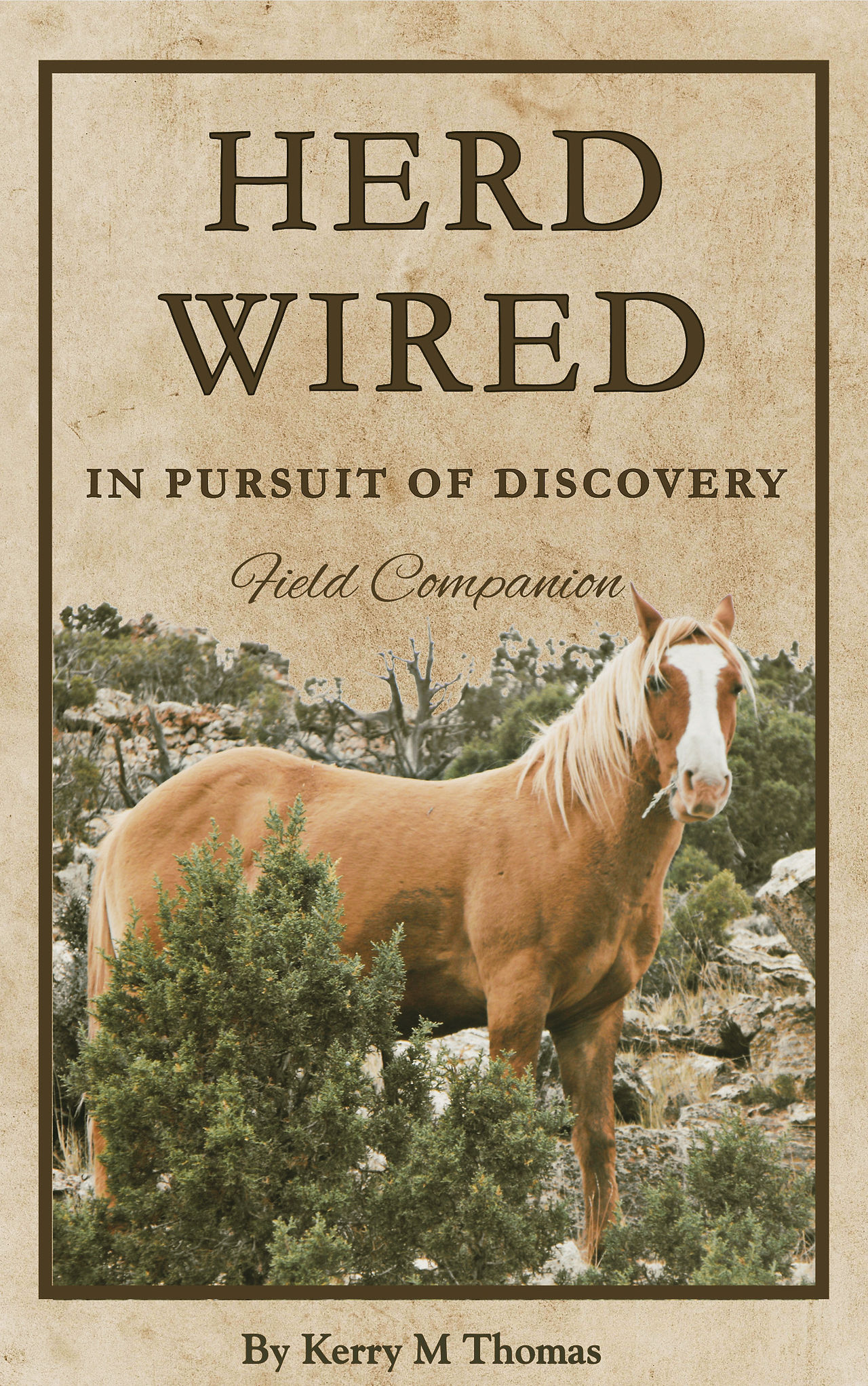
Herd Wired Book 
Understanding Herd Dynamics Herd Structure Masterclass Learning Library

This helped me understand that what I’ve been calling inconsistency isn’t disobedience at all, but mental fatigue and sensory overload. It completely shifted how I think about training, partnership, and responsibility. This isn’t about doing more to the horse, it’s about understanding the world they’re trying to move through with us.